In today’s interconnected economy, commerce moves at an incredible speed, yet it’s more fragile than ever. A single storm on the other side of the world can leave shelves empty in your local store. A minor manufacturing delay can cascade into weeks of backorders.
Businesses are navigating a constant stream of disruptions, shifting customer expectations, and intense pressure to perform. The answer isn’t to simply make one part of the process faster; it’s to build a smarter, more connected system. This is where an end-to-end supply chain becomes a strategic necessity for survival and growth.
Understanding the End-to-End Supply Chain Concept
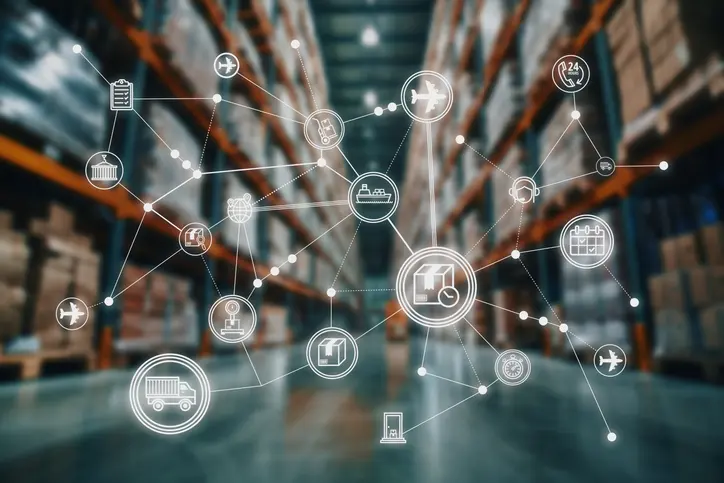
End-to-end (E2E) supply chain management is a holistic philosophy. It views the entire journey of a product, from the sourcing of raw materials to the final delivery to a customer’s doorstep, as a single, unified system. Instead of treating each step as a separate task, it integrates them into a cohesive flow. This comprehensive ecosystem includes critical components like strategic planning and forecasting, raw material sourcing, lean manufacturing, intelligent logistics, and responsive customer service.
The difference between this model and a traditional one is stark. Traditional supply chains often operate in silos. The procurement team rarely has real-time visibility into the manufacturing team’s capacity, while the logistics department might be completely disconnected from customer service feedback. This fragmentation leads to delays, miscommunication, and costly inefficiencies. An E2E supply chain, by contrast, breaks down these walls. It creates a seamless flow of information and materials, giving stakeholders at every stage a clear view of the entire process, fostering collaboration and enabling much greater operational agility.
The Strategic Business Value of an E2E Supply Chain
Adopting an E2E strategy is about building a competitive advantage. The primary benefit is a dramatic improvement in visibility and transparency. When you can see everything from supplier inventory levels to the location of a delivery truck in real-time, you can make smarter, faster decisions. This visibility directly enables significant cost optimization. Companies can minimize waste by aligning production with actual demand, reduce carrying costs by holding less excess inventory, and lower transportation expenses through better route planning.
Beyond efficiency, this model builds profound resilience. A company with a connected supply chain can anticipate potential supply chain disruption, like a port closure or a supplier shortage, and pivot quickly by rerouting shipments or activating alternate suppliers. This ability to mitigate risk is invaluable in a volatile global market.
Ultimately, all these improvements lead to enhanced customer satisfaction. With fewer stockouts, more accurate delivery estimates, and a smoother returns process, businesses can deliver the reliable and fast service that modern consumers expect, building loyalty and driving repeat business.
The Core Stages of the E2E Supply Chain Journey
When you look at the supply chain end to end, it becomes clear that every stage is connected. Each step affects what comes next, which means it’s less about isolated handoffs and more about keeping everything moving smoothly from start to finish.
Instead of treating sourcing, production, and delivery as separate processes, an end-to-end approach views the supply chain as one continuous flow. The goal is simple: move products from idea to customer as efficiently and reliably as possible.
Product Sourcing and Supplier Management
The journey begins long before a product is made. It starts with the strategic sourcing of raw materials and components. This initial phase is about more than just finding the cheapest vendor. It involves careful supplier selection, building collaborative relationships, and establishing procurement processes that are tightly integrated with demand forecasts. This ensures a reliable and cost-effective flow of high-quality materials exactly when they are needed for production.
Demand Planning and Production
With materials secured, the focus shifts to understanding what to make and when. This stage connects customer demand forecasting with production scheduling. In an E2E model, real-time sales data and predictive analytics feed directly into the manufacturing plan. This allows for incredibly accurate forecasting and agile production runs, empowering a company to produce the right quantity of goods at precisely the right time. The result is a sharp reduction in both wasteful overstock and opportunity-losing stockouts.
Inventory and Warehouse Management
Once goods are produced, they must be managed effectively. Strategic inventory control and warehousing are critical links in the chain. This involves more than just storing boxes on shelves. An integrated system optimizes where inventory is held to be closest to the end customer, uses technology to ensure accurate order picking, and keeps products secure and accessible. The goal is to ensure high product availability while minimizing storage costs and enabling rapid order fulfillment.
Logistics and Final Mile Delivery
This is the stage where the product is physically on the move. Logistics and distribution cover the entire transportation network, from moving finished goods from a factory to a distribution center, all the way to the crucial last-mile delivery to the customer’s home or business. An integrated logistics system optimizes shipping routes, consolidates shipments to reduce costs, and provides real-time tracking information to both the business and the end consumer, improving speed and reliability.
Reverse Logistics and Customer Service
The journey doesn’t always end upon delivery. Reverse logistics handles everything that happens after the sale, including returns, repairs, and recycling. In an E2E framework, this process is not an afterthought but a vital part of the customer experience. A simple, transparent returns process is directly linked to customer satisfaction and brand loyalty. Managing this flow effectively also provides valuable data on product quality and can support sustainability goals through recycling and refurbishment programs.
Key Technologies Powering the Modern Supply Chain
True end-to-end integration is made possible by a suite of powerful digital tools. This technological backbone is what transforms a series of disconnected steps into a single, intelligent, and responsive system.
AI and Predictive Analytics
Artificial Intelligence and machine learning are the brains of the modern supply chain. These technologies process large volumes of data across demand, inventory, and supply constraints to generate more accurate forecasts and optimized inventory targets across multiple locations.
Instead of relying on static assumptions or manual adjustments, AI continuously evaluates patterns, variability, and risk across the network. This allows businesses to anticipate demand shifts, identify potential disruptions before they escalate, and make decisions that balance service levels with cost. The result is a shift away from reactive firefighting toward proactive, data-driven supply chain management.
Internet of Things (IoT)
The Internet of Things provides the nervous system. IoT sensors embedded in shipping containers, on warehouse shelves, and within delivery vehicles offer real-time tracking and monitoring of assets. This provides live data on not just location, but also critical conditions like temperature, humidity, and shock. This granular visibility ensures product integrity, prevents theft, and gives managers an up-to-the-minute view of operations.
Cloud-Based Platforms and ERP Integration
A unified digital infrastructure is essential for breaking down information barriers. Cloud-based platforms and integrated enterprise resource planning (ERP) systems act as the central hub, creating a single source of truth for the entire organization. This ensures that every stakeholder, from the procurement manager to the customer service agent, is working from the same real-time data, eliminating silos and fostering seamless collaboration.
Blockchain for Transparency and Trust
Blockchain technology offers a new level of security and transparency. By creating a decentralized and immutable ledger of transactions, it provides an unchangeable record of a product’s journey. This enhances traceability, making it easy to verify the authenticity of high-value goods, confirm ethical sourcing practices, and build unshakable trust among suppliers, partners, and consumers.
Overcoming Common E2E Implementation Challenges
Moving to an end-to-end supply chain is a meaningful shift, and it comes with its challenges. One of the most common is breaking down internal silos. When teams are used to operating independently, sharing data and aligning decisions across functions can take time and intention.
Technology is another hurdle. Many organizations rely on a mix of legacy systems that weren’t designed to work together. Connecting those systems and ensuring data is accurate, consistent, and usable across the network is essential for any E2E strategy to work.
Global operations add another layer of complexity. Geopolitical risk, regional regulations, and trade compliance all need to be factored into planning and execution. These variables can’t be managed in isolation, which is why visibility across the entire network matters.
Finally, success depends on change management. Teams need to understand how new tools and processes support better decisions, not replace people. Training, clear communication, and a shared commitment to transparency are what ultimately turn an E2E strategy from a technical project into a real operational advantage.
Best Practices for E2E Supply Chain Optimization
Successfully navigating the challenges of implementation requires a strategic approach. The foundation is building strong, collaborative supplier relationships. Treating suppliers as true partners fosters trust and information sharing, which is crucial for agility.
Alongside this, businesses must commit to investing not only in the right technology but also in comprehensive employee training to ensure the workforce can leverage these new tools effectively.
Harnessing the power of data analytics is non-negotiable. Decisions at every stage should be informed by real-time data, not by intuition or outdated reports.
Lastly, organizations must foster a culture of continuous improvement. The supply chain is not a static system; it must be constantly monitored, analyzed, and refined to adapt to changing market conditions and maintain a competitive edge.
Measuring Success: Key Metrics and KPIs
The right KPIs help teams understand what’s working, where friction exists, and how decisions impact both cost and service levels.
One of the most important metrics is order fulfillment cycle time, which tracks how long it takes from the moment a customer places an order to when it arrives. This provides a direct view into overall speed and execution efficiency.
Inventory turnover shows how quickly inventory moves through the system. Higher turnover typically indicates better alignment between supply and demand, while low turnover can signal excess stock or slow-moving products tying up capital.
From the customer’s perspective, on-time delivery rate is critical. It measures reliability and directly reflects how well the supply chain meets expectations.
Finally, cost to serve captures the total cost of fulfilling an order across the entire supply chain. This metric helps businesses understand true profitability by linking operational decisions to financial outcomes.
The Next Chapter of End-to-End Supply Chains
End-to-end supply chains have become the standard for how modern operations run. As markets move faster and disruptions become more common, disconnected and slow-moving systems simply can’t keep up.
Looking ahead, supply chains will continue to become more automated and more data-driven. AI will play a bigger role in helping teams anticipate issues, balance trade-offs, and make better decisions across the network. At the same time, sustainability is becoming a core performance measure, not an afterthought, pushing companies to understand the full impact of their supply chains from start to finish.
The next generation of supply chains won’t just be connected. They’ll be designed to adapt in real time, correct course when conditions change, and provide clear visibility across the entire network. Many organizations have already started this shift, and those that move early will be better positioned to compete.