

Real-time inventory tracking stops being a “simple stock count” the moment your business scales beyond one warehouse and a few predictable SKUs.
Suddenly, inventory is moving across channels, marketplaces, suppliers, transfers, returns, and promotions faster than most teams can reconcile in spreadsheets. The problem is no longer inventory visibility. It’s decision latency.
By the time many businesses realize inventory is drifting, the damage is already expensive: stock-outs on best-sellers, cash trapped in slow-movers, emergency transfers, expedited freight, and planners buried in spreadsheet trying to correct errors instead of improving service levels.
Modern inventory tracking is not about counting products. It is about creating a real-time decision system for replenishment, allocation, and inventory risk management.
The companies getting this right are treating inventory tracking as an operational intelligence layer connected directly to forecasting, replenishment, and supply chain execution. While managing over 33,000 SKUs across 31 locations, Greg’s Motor Spares reduced stock-outs by 35% after implementing AI-driven inventory planning workflows. Meanwhile, Italian jewelry retailer Guzzi Gioielli increased available SKUs by 25% during peak demand periods without increasing tied-up capital.
What Inventory Tracking Really Means in Modern Supply Chains
Inventory tracking isn’t just knowing what you have on hand; it’s the capability to understand how inventory is moving, why it is moving, and what that implies for your replenishment decisions. The goal is practical: reduce stock-out and overstock, protect customer experience, and keep inventory investment aligned with real demand.
Visibility is not the same as accuracy
Most businesses already have “inventory visibility.” That is not the problem.
The problem is that the inventory number everyone trusts is often wrong, delayed, incomplete, or operationally meaningless.
An ERP may show stock available while the pickface is empty. A warehouse may look understocked, while excess inventory sits in another node. Ecommerce channels may continue selling inventory that is already committed elsewhere.
This is where inventory tracking fails in practice, not because businesses lack data, but because the data arrives too late, lives in disconnected systems, or cannot support replenishment decisions fast enough.
And accuracy becomes harder to achieve as soon as you add complexity: multi-warehouse networks, omnichannel fulfillment, marketplace inventory pools, or Bills of Materials for assembled products. At these points, tracking must reconcile multiple signals: receipts, sales, transfers, production consumption, without forcing the team into constant manual fixes. The cost of “just double-checking” is real: it consumes planner time and delays decisions that should be made while there is still room to act. Nobody has time for that!
Strong tracking also requires a shared cross-functional language. If finance evaluates inventory differently from operations, or if purchasing uses different lead time assumptions than the demand planning team, you end up debating numbers instead of improving outcomes. The most effective setups align on a few non-negotiables, such as definitions for available-to-promise, in-transit stock, and safety stock, so performance discussions are grounded in consistent inputs.
From stock movement to decision-ready signals
Inventory tracking becomes truly valuable when it connects stock movement to replenishment actions. Knowing that inventory dropped isn’t enough. You need to understand whether the drop is expected (seasonality, promotion) or anomalous (forecast error, supply delay, sudden trend change). This is where tracking intersects with demand planning: the same data should power a clear view of actual vs forecast, highlighting where assumptions are drifting.
Manual tracking is rarely able to keep up with the volume and frequency of all these checks. An good inventory management software can track supply, demand, and inventory together, then run smart analysis on top of the data, so teams spend less time compiling and more time deciding. In practice, this means detecting risk earlier: understock before a best-seller goes unavailable, or overstock before slow-movers turn into markdowns and write-offs.
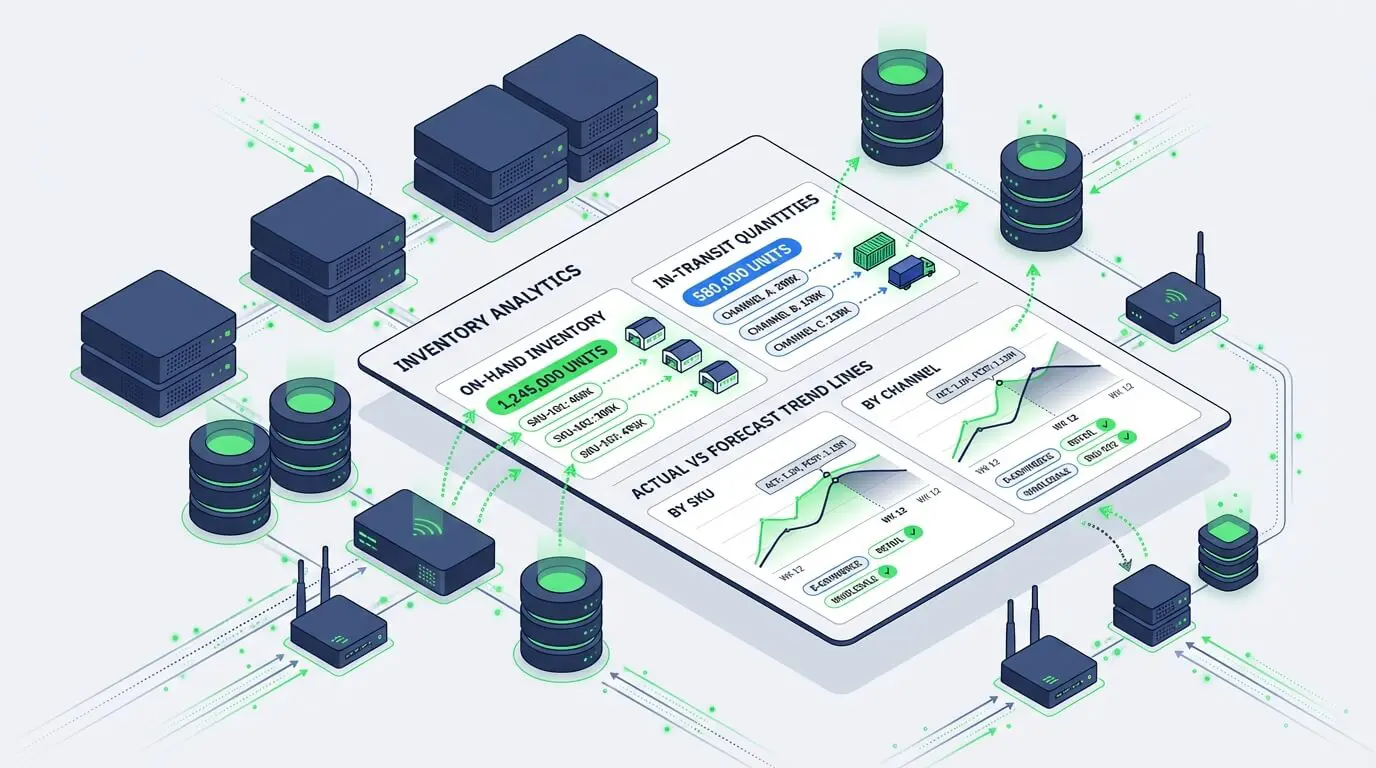
This shift from reactive reporting to proactive inventory intelligence is where AI-driven tracking becomes commercially valuable. Casa de las Baterías reduced stock-outs by 25% after implementing predictive inventory planning and real-time replenishment monitoring across high-demand SKUs. Instead of discovering shortages after shelves emptied, the team was able to identify inventory risk earlier and rebalance stock proactively.
Tannico faced a different challenge: forecasting volatility across roughly 10,000 SKUs sold in 19 countries. By integrating AI forecasting with inventory tracking and replenishment workflows, Tannico reduced mean forecast error by 36% and significantly improved inventory allocation decisions during seasonal peaks.
Decision-ready tracking also supports prioritization. Not every exception deserves the same urgency: a small mismatch on a low-velocity SKU is different from a service-level threat on a high-margin best-seller. The right tracking model helps you focus attention where it protects revenue, customer experience, and working capital, without requiring a daily “spreadsheet firefight.”
Where Manual Tracking and Spreadsheets Create Risk
Spreadsheets often start as a fast solution, then quietly become the operational backbone, and then quietly become your downfall. The problem is not the tool itself; it is the hidden complexity of maintaining it under real-world conditions, multiple data feeds, frequent changes, and constant exceptions. When tracking depends on manual updates, the business pays through delay, errors, and inconsistent decisions across teams.
Costly errors hide in daily routines
Inventory errors rarely arrive as dramatic disasters. They show up quietly:
- the PO that was never updated
- the transfer still “in transit” three days later
- the SKU that looked healthy until the promotion started
- the planner overriding numbers because nobody trusts the dashboard
This is how businesses like yours can slowly drift into stock-outs and overstock at the same time. One side of the business thinks inventory is too high. The other side cannot keep best-sellers available.
Inventory is one of the largest assets on the balance sheet for many retail, e-commerce, and CPG businesses. That makes small tracking errors surprisingly expensive, especially when they accumulate across hundreds or thousands of SKUs. Keeping a close track of stock movement is super important for avoiding accounting errors that translate into real costs, misstated stock value, incorrect replenishment, or missed availability during peak demand.
Manual processes also create “single points of failure.” When one person owns the file logic, the data refresh, and the exception handling, operational continuity becomes fragile. The risk shows up during high-pressure periods such as during promotions, seasonal peaks, supplier disruptions, etc., exactly when the business needs faster decisions and clearer priorities.
In practice, the most common failure points are not dramatic; they are mundane and repeated:
- Late or incomplete updates for receipts, returns, and transfers, causing incorrect on-hand balances.
- Different versions of the same file across teams, leading to inconsistent reorder decisions.
- Manual filters and formulas that break when new SKUs, warehouses, or channels are added.
- Limited traceability: it is hard to explain why a number changed and who changed it.
- Exception overload, where planners spend time reconciling data instead of improving service levels.
When demand shifts, lag becomes stock-out or overstock
Inventory tracking is really pressure-tested when demand becomes volatile: new product launches, viral spikes, competitor moves, weather-driven patterns, or promotion effects. When your tracking updates lag behind reality, the whole org reacts too late, often with expensive expedites, emergency transfers, or overly aggressive ordering that later turns into overstock. The outcome is predictable: higher costs, lower availability, and a team stuck in reactive mode.
This is where demand forecasting and inventory management need to operate as one workflow. Forecasting methods, such as time series analysis, statistical models, and collaborative planning, can project demand, but only if tracking data is reliable and current. When teams can compare actual vs forecast at the right granularity (SKU, channel, location), they can detect drift early and adjust replenishment parameters before stock-outs occur or cash gets locked into slow-movers.
Real-Time Inventory Tracking
Real-time inventory tracking means inventory positions update continuously across warehouses, suppliers, ecommerce channels, and fulfillment operations.
Instead of relying on static reports or end-of-day reconciliation, modern inventory tracking systems continuously monitor:
- sales velocity
- replenishment timing
- supplier delays
- stock transfers
- returns
- order allocation
- inventory coverage
- actual vs forecast demand
This matters because inventory problems compound quickly. A delayed signal today becomes a stock-out tomorrow and excess inventory next month.
Businesses using AI-powered inventory tracking systems like Intuendi can react earlier, prioritize higher-risk SKUs, and automate replenishment recommendations before service levels deteriorate.
Aer-Wsale improved inventory ROI by 87% while reducing stock-outs by 10% after implementing our AI-powered inventory monitoring and replenishment optimization workflows designed to stabilize inventory decisions under volatile demand conditions.
How You Think About Inventory Tracking (and Why It Matters)
As a supply chain and demand planning expert, you don’t evaluate inventory tracking as a “warehouse feature.” You judge it by your outcomes: fewer stock-outs on best-sellers, less cash tied up in slow-movers, and a replenishment process that stays stable under volatility. You need tracking to work across channels and locations, because omnichannel fulfillment and complex networks make a single on-hand number insufficient for decision-making.
I’m sure you already have systems in place such as ERP, WMS, e-commerce platforms, marketplace connectors, but maybe you’re struggling with fragmented signals, manual reconciliation, and slow exception handling. The value of inventory tracking is its ability to translate data into actionable insights and consistent choices, not just reporting. That is why the narrative has to move quickly from “what is tracking” to “how tracking enables better replenishment, coverage, and service levels.”
And that’s exactly why we built Symphonie, the intelligence layer that turns your supply chain data into decisions, instantly.
What decisions inventory tracking must support
In retail, e-commerce, and CPG, the recurring decisions are highly operational and time-sensitive. Teams need to decide what to reorder, how much, and when, all while balancing lead times, supplier constraints, and target service levels. You also need to decide where to place inventory across a multi-warehouse network to avoid costly transfers and last-minute expediting.
Inventory tracking earns trust when it improves those decisions with signals that are consistent and comparable over time. In practice, that means tracking should not only capture on-hand stock, but also clarify what is available-to-promise, what is in transit, and what is committed. When these definitions are stable, teams can interpret exceptions correctly and act without waiting for another manual check.
Just as important, the tracking layer must connect naturally with demand planning. When the market shifts, the business needs fast feedback loops between actual sales and expected demand. A workflow that surfaces actual vs forecast deviations at SKU and channel level helps teams intervene early before a stock-out becomes a revenue problem or an overreaction becomes excess inventory.
What you should expect from “modern” tracking
Nobody in supply chain wants another dashboard.
What you actually want is fewer manual checks, faster replenishment decisions, and fewer surprises during peak demand periods.
“Modern inventory tracking” only matters if it reduces operational noise:
- less spreadsheet maintenance
- fewer emergency transfers
- faster exception handling
- clearer reorder priorities
- more reliable inventory allocation
The best inventory tracking systems don’t overwhelm planners like you with more data. They surface the few decisions that actually matter before inventory problems become expensive.
AI is relevant only when it is pragmatic. The expectation is AI-powered support that reduces noise, prioritizes the right exceptions, and turns complexity into operational choices, especially around replenishment quantities, timing, and coverage targets. A co-pilot approach (like an AI assistant that explains drivers and suggests actions) is more credible than opaque outputs, because planners and buyers need transparency to collaborate with finance, commercial, and operations.
Again, enter Symphonie 🙂
Finally, these teams care about time-to-value. If implementation takes too long or requires constant manual tuning, the solution becomes another system to maintain. The strongest positioning is a clear path from connected data to daily decisions, with repeatable policies that scale across SKUs, warehouses, and suppliers.
Why Inventory Tracking Matters for Your Business
Inventory tracking is the operational discipline that prevents stock from becoming guesswork. It protects revenue when demand spikes, reduces carrying costs when demand slows, and keeps purchasing decisions aligned with what is actually happening across channels and locations. For retailers and brands, the stakes are amplified by high online penetration and complex fulfilment models, where customer expectations for availability and delivery speed are unforgiving.
Are you asking “what do you mean by inventory tracking?” Inventory tracking is the process of recording and monitoring stock quantities, locations, and movements (receipts, sales, transfers, returns) in near real time so teams can make reliable decisions on replenishment, allocation, and service levels. It connects inventory data to actions that prevent stock-out and overstock.
Done well, tracking reduces waste in two directions at once. It limits understock by highlighting risks early (before best-sellers drop below target coverage), and it limits overstock by exposing slow-movers that are absorbing working capital. It also improves inventory accuracy, which is a prerequisite for credible forecasting, stable S&OP discussions, and clean financial reporting.
The 3 Main Methods of Tracking Inventory
There are three common ways organisations track inventory: manual/spreadsheets, periodic systems, and perpetual systems. The right choice depends on SKU volume, channel complexity, and how quickly you need decisions to update when reality changes. In practice, many teams use a hybrid approach during transitions, but the operational differences between methods remain clear.
The table below summarises the trade-offs in a way that maps directly to daily planning and replenishment work.
| Method | How it works | Best for | Main limitations |
| Manual / Spreadsheet | Stock updates entered by people, often via Excel exports/imports | Low SKU counts, early-stage operations, temporary controls | High error risk, slow refresh, weak traceability, hard to scale |
| Periodic | Inventory is counted at set intervals and reconciled in batches | Stable demand, lower-value items, environments with limited scanning | Decisions are made with “old” data; exceptions surface late |
| Perpetual | Inventory updates continuously via transactions, scanning, and integrations | Omnichannel, multi-warehouse, high service-level expectations | Requires strong processes, data hygiene, and system discipline |
Manual Tracking with Excel
Many teams use excel, especially to prototype a process or regain short-term control. Excel can work when SKU counts are low and workflows are stable, but it becomes fragile once you add multiple locations, high order frequency, or frequent returns. The biggest risk is not “Excel itself,” but the manual reconciliation that follows when reality diverges from the file. Eeek, we don’t miss that!
If Excel is your starting point, keep the template deliberately simple and decision-focused. Use a single SKU master, a movement log (inbound, outbound, transfers, returns), and a calculated available figure that separates on-hand from committed stock. Add a clear lead time field per supplier and a basic reorder point trigger, then lock formulas to avoid accidental edits.
Barcode and RFID Systems
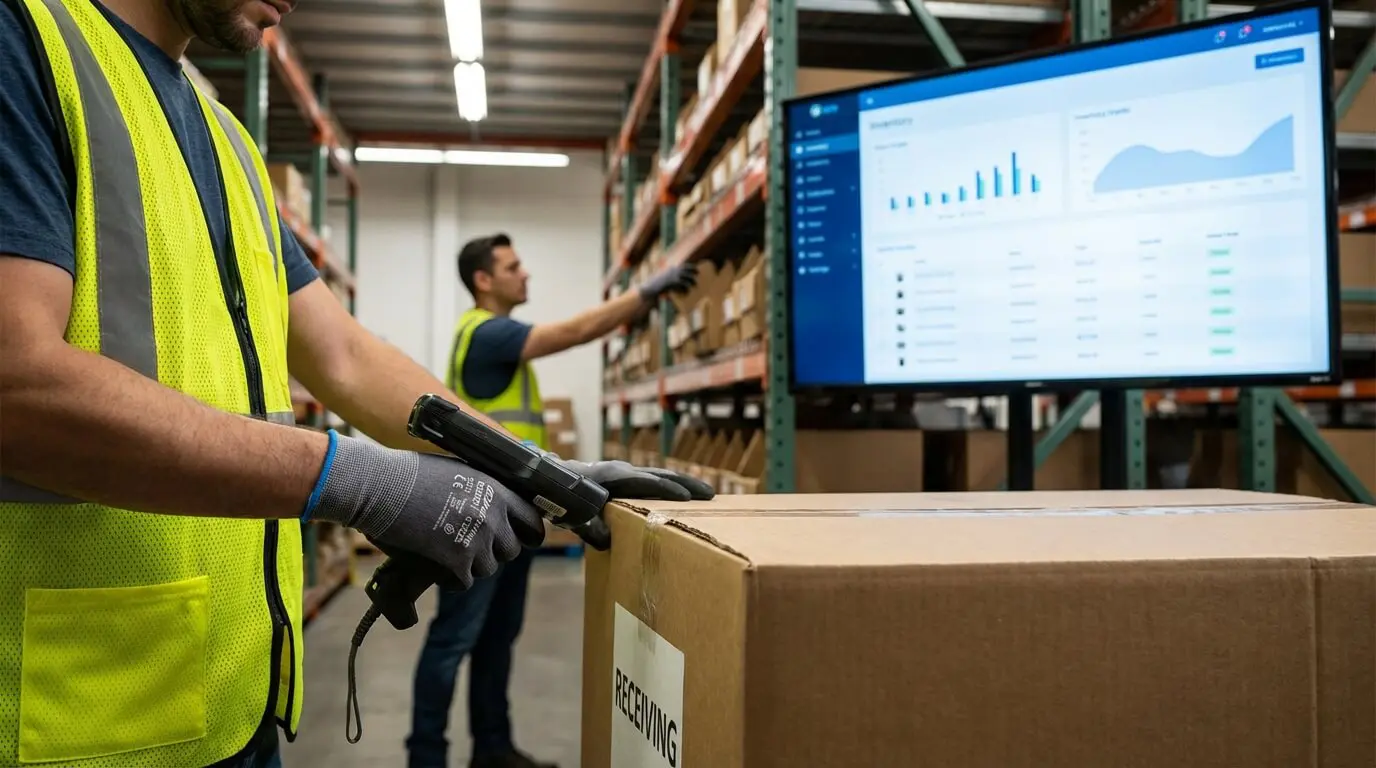
Barcode scanning moves tracking from manual updates to reliable transaction capture. It improves inventory accuracy at receiving, picking, cycle counts, and returns, areas where UK e-commerce operations often struggle due to high reverse logistics volume. RFID adds speed and automation for environments with large item counts or where line-of-sight scanning slows throughput.
The operational benefit is consistency: the system records what actually happened, when it happened, and where. That traceability matters when planners need to explain exceptions across functions, or when availability disputes arise between stores, warehouses, and online channels.
Cloud-Based Inventory Software
Cloud-based inventory software connects sales, supply, and stock in a single workflow and updates it continuously, especially when integrated via API with ERP, WMS, and e-commerce platforms. For planning teams, the value is not only “real-time numbers,” but decision-ready outputs: clear understock/overstock signals, target coverage monitoring, and replenishment suggestions that can be reviewed and approved quickly.
This is especially important in wholesale and distribution environments with complex purchasing cycles and supplier constraints. One Intuendi customer improved container utilization and replenishment coordination by aligning purchasing decisions with transportation capacity and inventory priorities using AI-driven inventory optimization workflows. The result was improved inventory availability and stronger profitability despite ongoing logistics volatility.
How do you track inventory? A practical operational flow looks like this: capture transactions (sales, receipts, transfers, returns); standardise inventory states (on-hand, allocated, in-transit, available); set lead times and coverage targets; compare actual vs forecast to detect drift; trigger reorder points; generate and validate order proposals; then continuously audit exceptions to keep data and policies aligned.
Choosing the Right Inventory Tracking System
Choosing a tracking system is less about features and more about fit with your operating model. If you run multi-warehouse fulfilment, sell across multiple channels, or manage promotional volatility, you need perpetual tracking with reliable integrations. If your business is simpler, the priority may be process discipline and data consistency rather than advanced automation.
Evaluate options using criteria that planners and supply chain leaders actually feel day-to-day: integration effort (especially API readiness), multi-location logic, support for lead times and supplier constraints, and transparency on how suggested replenishment quantities are generated. A solution that improves time-to-value usually combines automation with explainability, so teams can trust outputs and collaborate on decisions.
Common Inventory Tracking Challenges & Solutions
Most tracking failures are not “technology problems”; they are mismatches between process, data, and decision cadence. A common scenario is availability that looks healthy in the system but fails at fulfilment because allocated, damaged, or returned stock is not classified correctly. Another is demand volatility that invalidates static parameters, causing reorder points and buffers to drift away from reality.
Practical fixes are often straightforward: enforce consistent inventory states, tighten inbound and returns capture, and focus on exception-driven workflows rather than manual full-catalog reviews. When forecasting and tracking share the same view of actuals, teams can use actual vs forecast signals to adjust coverage targets and reorder points before service levels suffer.
Inventory Tracking KPIs
The most important inventory tracking metrics include:
- Stock-out rate
- Inventory accuracy
- Days of inventory on hand (DOH)
- Inventory turnover
- Available-to-promise inventory
- Fill rate
- Replenishment cycle time
- Forecast accuracy
- Inventory ROI
- Excess and obsolete inventory
- Emergency transfer frequency
- Inventory carrying cost
Modern inventory tracking systems continuously monitor these KPIs in real time to improve replenishment responsiveness, inventory allocation, and service-level performance.
Inventory Tracking Best Practices for 2026
Inventory tracking is moving toward more automation, more frequent decision cycles, and fewer manual interventions. The winning pattern is a system that turns continuous data into clear priorities: what requires action, what can be left alone, and what needs parameter changes because the market shifted. For supply chain teams, this is where AI earns its place, by reducing noise, accelerating analysis, and keeping decisions consistent.
By 2026, best practice increasingly means adopting an AI-powered co-pilot approach that helps teams interpret exceptions, understand drivers, and move from insight to replenishment action quickly. Instead of relying on brittle spreadsheets, teams benefit from integrated workflows that connect tracking, forecasting, and ordering, while still allowing human review and control.
From Tracking to Competitive Advantage
Inventory tracking becomes strategic when it reliably answers the questions that drive performance: what is truly available, where risk is building, and what action will protect service levels while keeping working capital under control. That shift changes the day-to-day reality for planning and purchasing teams: fewer fires, faster decisions, and clearer collaboration with finance and commercial stakeholders.
If adoption feels blocked by concerns about investment, integration complexity, or trust in technology, the strongest response is operational evidence: cleaner actual vs forecast feedback loops, measurable reductions in manual workload, and replenishment decisions that are explainable and repeatable. With the right foundations and automation, inventory tracking stops being a reporting task and becomes a system of control that helps you stay ahead of the market.
Inventory Tracking Should Not Require a Spreadsheet War Room
Inventory tracking becomes strategically valuable when it helps teams act before inventory problems become financial problems.
The businesses outperforming today are not manually reconciling spreadsheets across warehouses and channels. They are using AI-powered inventory intelligence to continuously monitor demand drift, replenishment timing, supplier variability, and inventory risk in real time.
That shift changes inventory management completely:
- fewer stock-outs
- less excess inventory
- faster replenishment decisions
- better inventory allocation
- stronger cash flow
- less operational firefighting
Inventory tracking should not feel like detective work. It should function like an operational control system that helps planners move faster, prioritize better, and protect service levels before problems escalate.
That is where modern AI-driven inventory tracking creates real competitive advantage.
Tracking inventory is crucial for optimizing cash flow and operational efficiency. By monitoring your inventory levels, you can identify slow-moving items and reallocate resources to high-demand products, similar to how Aer improved their inventory ROI by 87%.
Implementing data-driven strategies, such as reallocating inventory toward high-rotation SKUs, can significantly enhance your inventory management. Companies like Aer have successfully adopted these strategies to address challenges like lost sales opportunities, leading to substantial revenue growth.
Utilizing AI-powered demand forecasting can streamline your inventory planning and reduce manual forecasting time. For instance, Wells Lamont achieved a 33% reduction in forecasting time by implementing AI solutions, enabling them to focus more on strategic initiatives.
Absolutely. Small businesses can leverage advanced inventory tracking methods to enhance their operational efficiency, just as Guzzi Gioielli did during peak seasons. Their data-driven SKU prioritization strategies led to a 17.5% increase in revenue, demonstrating that effective inventory management can yield impressive results regardless of business size.
To prevent stockouts, it’s essential to anticipate demand spikes through effective inventory tracking and planning tools. Companies like Aer have successfully reduced their stockout rates by 10% by implementing proactive planning processes, ensuring they are well-prepared for high-velocity demand periods.
