



A beverage e-commerce business with three physical stores runs out of its top-selling sparkling water two weeks before the summer peak. Meanwhile, its stockroom is full of a slow-moving citrus line that no one plans to reorder. A fashion brand ships winter coats to a warehouse fifteen minutes from a store that already has forty units unsold on the rack. A food manufacturer commits production capacity to a seasonal SKU based on last year’s spreadsheet, then sees actual orders miss the forecast by 20%. Different sectors, same pattern: the product mix was not revisited frequently enough as market conditions changed.
If you manage supply chain operations, demand, or production, this scene will feel familiar. You may be the one explaining to a category manager why coverage looks fine on paper but the shelf is empty, or why capital is tied up in inventory that is not turning.
Assortment management helps determine which products to stock, in what depth, and across which channels and locations, using customer demand, profitability, service requirements, and operational constraints. Get this right, and the reorder decision you have been putting off becomes less of a guess.
What is assortment management? Definition and examples for retail teams
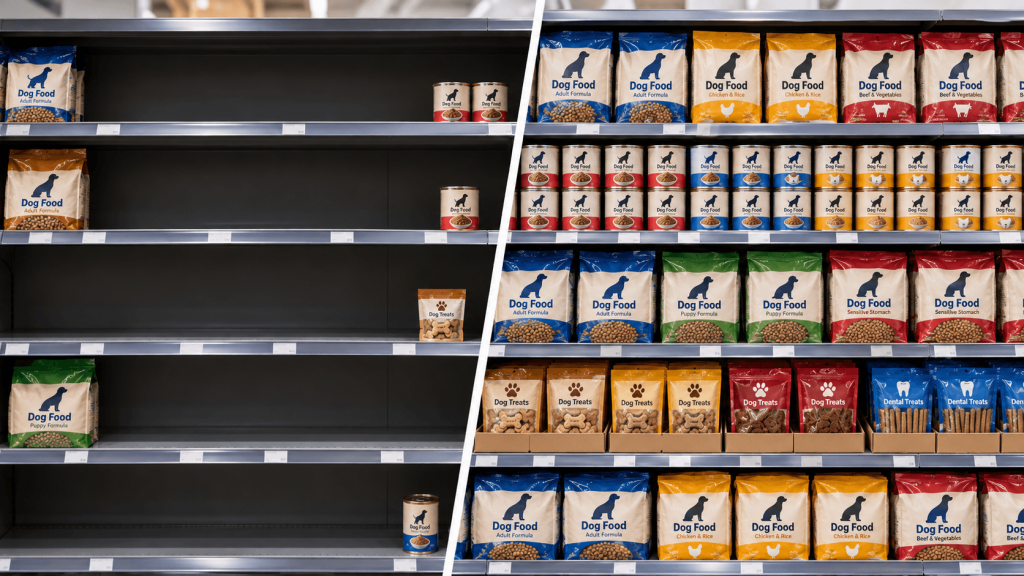
Put simply, your beverage business runs out of the sparkling water that performs well with customers arriving from Instagram, while three less popular flavors sit in several stores’ backrooms. That points to a problem in how the assortment is being managed.
Demand forecasting may have done its job while the product mix remained wrong. Assortment management is the ongoing process of deciding which products to stock, in what quantities, at what price points, and through which channels. These decisions should reflect what customers actually buy, not simply what the catalog has always carried. Regular assortment reviews can help retailers identify opportunities to improve availability and customer experience, although outcomes also depend on data quality, pricing, service, product quality, and local demand.
Assortment management vs. category management: where category assortment fits
Category management decides the roles categories play on your shelf or site, such as which ones drive traffic and which ones drive margin. Assortment management decides what actually fills those roles: how many SKUs, at what depth, and in which store or warehouse. A broad assortment covers many categories for one-stop convenience, while a deep assortment concentrates more choice within fewer categories to build specialist loyalty. Many fashion and beverage operators use a hybrid approach, with deeper assortments in brand-defining categories and broader coverage elsewhere, balancing customer choice against inventory and operating costs.
The main parts of merchandise management planners need to manage
Merchandise management goes beyond individual reorder decisions. It gives planners the levers to make an assortment work at scale, not just look good on paper. These two groups of variables shape the decisions that follow.
Product, price and channel: the variables that shape your assortment planning
The SKU, price point, and channel work as a set. Change one, and the other two may need to move with it. A fashion brand selling the same coat online and in-store may need different inventory depths by channel because demand, return rates, fulfillment models, and browsing behavior can differ. Getting this wrong can leave a store’s best-seller sold out while the same SKU sits untouched in the online warehouse, a mismatch that disciplined retail inventory planning should expose early.
Company policy and cost constraints behind every assortment decision
No assortment plan survives contact with minimum order quantities, packaging multiples, or a fixed procurement budget. A small or midsize food manufacturer planning next quarter’s production may need to fit its target SKU mix around supplier MOQs, production capacity, and warehouse pallet constraints, requirements that some inventory optimization platforms can model. Be honest here: no tool removes a genuinely undersized budget or an unreliable supplier. It can only tell you, faster, where the trade-off actually hurts.
Building an assortment planning strategy for a market that keeps shifting
For categories with volatile or seasonal demand, reviewing the assortment only once or twice a year may be too infrequent. Review it more often when demand changes quickly, lead times are long, or decisions are costly.
From spreadsheets to AI: assortment management tools, software and product assortment optimization
Teams that replace manual spreadsheet processes with data-driven assortment optimization may improve decisions around surplus stock and availability when the underlying data, forecast, and inventory replenishment parameters are reliable. If you are considering that shift across your warehouse network, start by comparing inventory optimization platforms.
JDA and Blue Yonder assortment optimization: comparing retail assortment management software
JDA Software is now part of the Blue Yonder brand, which provides enterprise supply-chain and category-planning capabilities for large retailers. These solutions can support complex enterprise requirements, but implementation effort and training requirements vary by product scope, integration complexity, and the customer’s internal resources. For teams seeking a lighter implementation, AI-enabled platforms may be worth evaluating, but only after checking their integration, governance, training, and support requirements.
Multi-echelon and multi-channel assortments: assortment localization across warehouses and stores
A single global assortment may not fit every location because demand, regulations, accessibility needs, and customer preferences can differ. Multi-echelon planning addresses the inventory side of that challenge by optimizing inventory placement across connected supply-chain levels, balancing demand, lead times, service targets, costs, and replenishment constraints. For a fashion network with regional style preferences or a beverage brand with seasonal store-level spikes, this is the difference between coverage that looks fine on average and coverage that actually holds up locally.
Start with the SKUs your own sales data already flags
Before evaluating a platform, export twelve months of sell-through data from your ERP or e-commerce system. Use an approved, access-controlled export, and exclude or anonymize personal data where applicable. The bottom quartile is a useful place to start reviewing surplus, but do not label it surplus automatically. Items that were out of stock during a promotion or seasonal peak may be lost-sales candidates, so check them before taking action. You may be able to build that list quickly with an existing spreadsheet, helping you assess whether a coverage problem warrants further investment before selecting software.
Bring us that list and we’ll review demand history, lead times, and constraints such as MOQs and packaging multiples. Then we’ll show how we calculate reorder quantities by SKU, channel, and warehouse. We work through that process using our inventory optimization software for multi-warehouse networks, with the SKUs you ranked rather than a catalogue-wide review.
Assortment management is the process of deciding which products to offer, in what quantities, at which locations, and through which sales channels. The goal is to create a product mix that matches customer demand while considering inventory availability, pricing, space, supplier constraints, and business objectives.
Category management focuses on how groups of related products contribute to the overall retail strategy, while assortment management determines the specific products, SKUs, variants, and quantities that should be offered within those categories. In practice, category strategy defines the role of a category, while assortment planning translates that strategy into a concrete product mix.
Assortment planning is the process of selecting the right combination of products for each store, warehouse, market, or sales channel. Effective assortment planning helps retailers reduce stockouts and excess inventory, improve product availability, respond to local demand, and make better use of working capital.
AI can support assortment optimization by analyzing demand patterns, sales history, inventory levels, lead times, product performance, and other operational constraints. This allows retailers to evaluate a larger number of assortment scenarios and make faster, data-driven decisions about which products to add, remove, expand, or reduce across different locations and channels.
There is no single review frequency that works for every retailer. Assortments should be reassessed more frequently when demand is volatile, products are seasonal, lead times change, or inventory performance deteriorates. Continuous or regular data-driven reviews can help retailers identify slow-moving products, stockout risks, and changes in customer demand earlier.
